DOMAINE DUGAT-PY
Gevrey-Chambertin
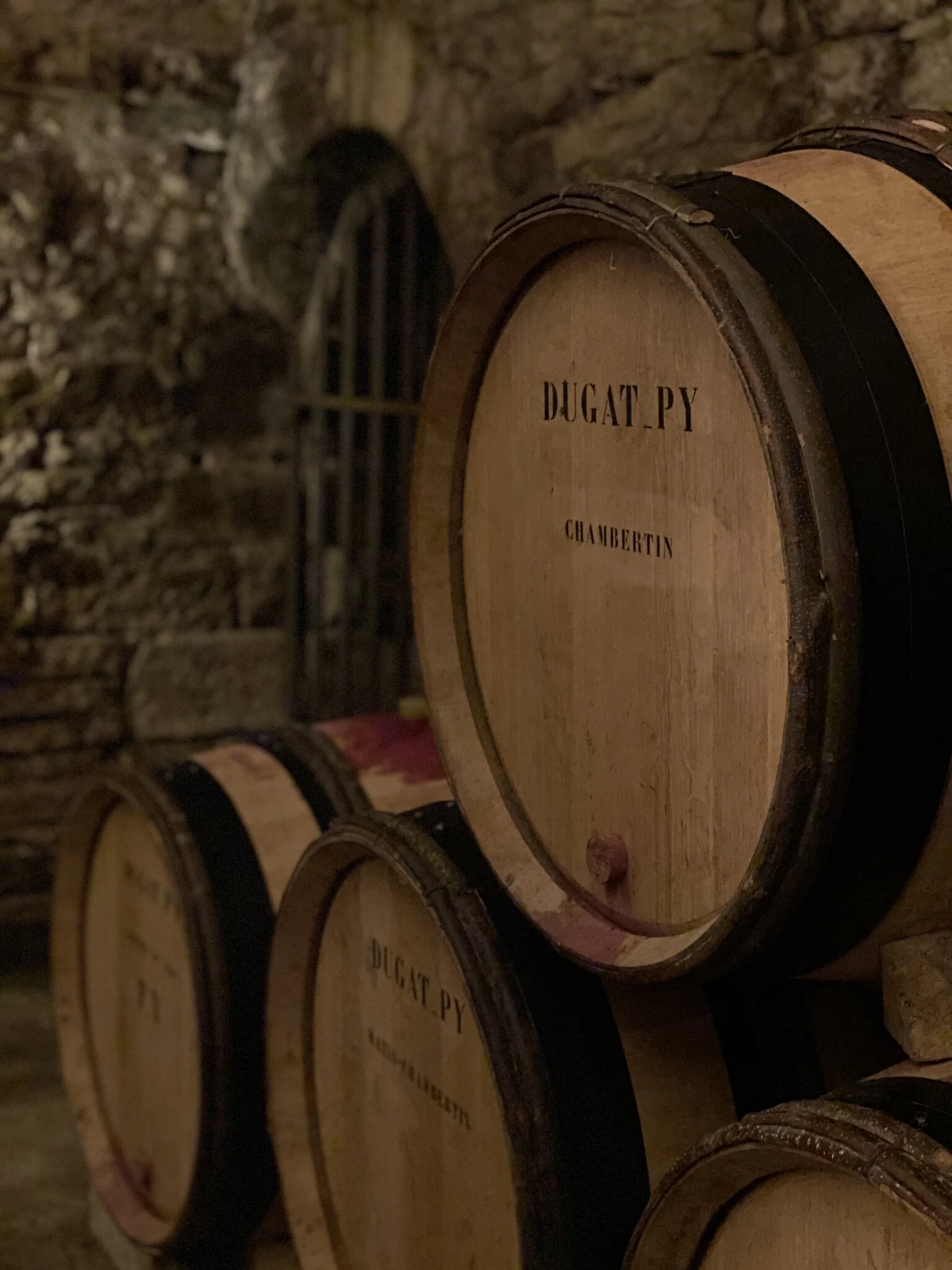
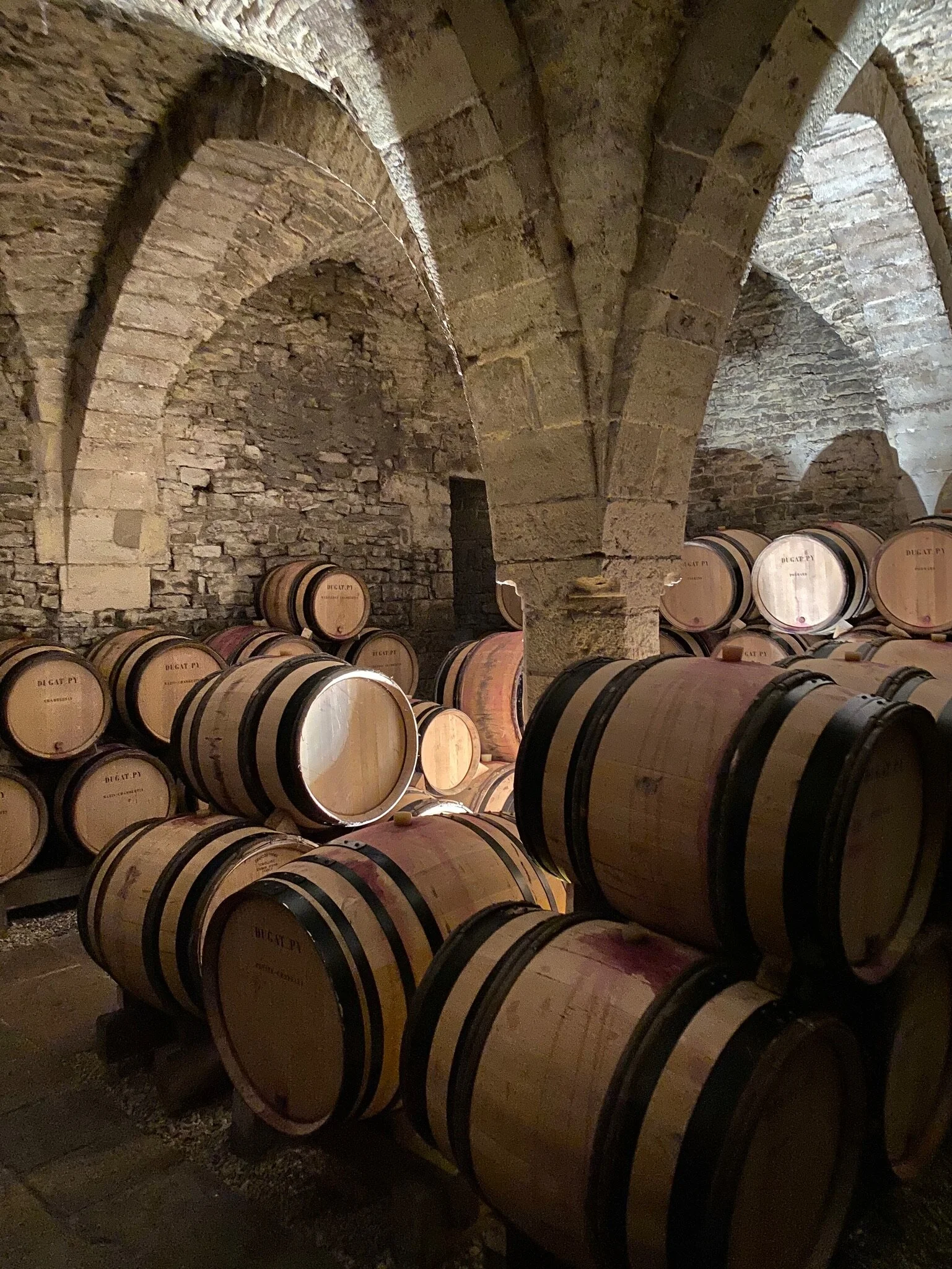
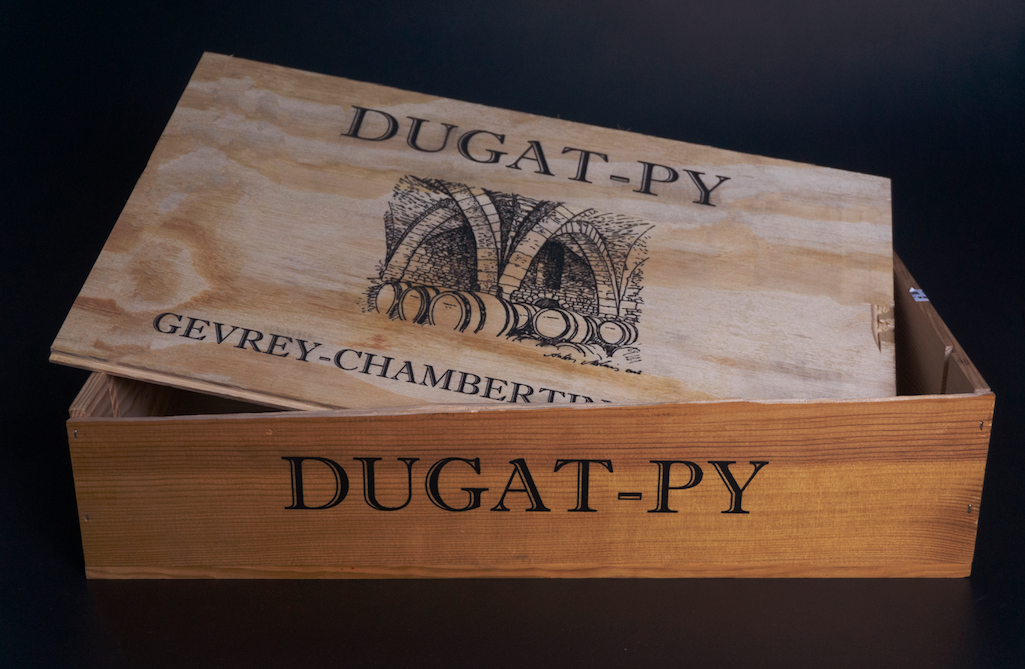
Located in the heart of Gevrey-Chambertin, at the foot of the iconic Combe de Lavaux, Domaine Dugat-Py is anchored in the historic buildings of the former Aumônerie. While little remains of the original structure above ground, the estate’s extraordinary vaulted cellars—constructed in the 11th and 12th centuries under the direction of Abbot Halinard—stand virtually unchanged. Continuing a nine-hundred-year legacy, the domaine’s wines mature quietly within these medieval stone crypts, where natural humidity and cool, stable temperatures provide ideal conditions for long-term élevage.
The roots of the modern domaine trace back to 1923, when Fernand Dugat married Jeanne Bolnot, uniting two deep viticultural lineages. The Bolnot family had been tending vines in the Côte de Nuits since the 17th century, and Jeanne inherited prized parcels across Gevrey-Chambertin, including prime plots in Grand Cru Charmes-Chambertin. In the difficult decades following the phylloxera epidemic, as Burgundy’s vineyards required widespread replanting on resistant American rootstocks, Jeanne took a position at the renowned Bernollin nursery in Gevrey and became one of the most celebrated grafters of her era. Recognizing the true potential of the region’s terroir, she actively encouraged Fernand to expand their landholdings.
Eventually, Fernand and Jeanne’s children—Maurice, Pierre, and Thérèse—divided the family holdings to establish their own individual domaines. Pierre, alongside his son Bernard, began estate-bottling wines in 1989 under the banner of Domaine Pierre Dugat. For years prior, the family’s concentrated production was eagerly purchased in barrel by Burgundy’s most elite négociants, including Lalou Bize-Leroy, who regularly sourced their Charmes-Chambertin. A defining moment arrived in 1994 when Bernard renamed the estate Domaine Dugat-Py, combining his surname with that of his wife, Jocelyne Py, to reflect their shared partnership in the cellar and vineyards.
A new chapter began in 1997 when Loïc Dugat-Py joined his father, Bernard. Taking complete operational leadership in 2015, Loïc has driven the estate’s profound evolution over the past decade. Under his direction, the domaine completed a total transition to certified organic and biodynamic viticulture, introducing tailored canopy management, horse-drawn plowing in delicate plots, and unclipped vine tops (tressage) to honor the vine’s natural vegetative cycle.
Today, the wines of Domaine Dugat-Py remain celebrated worldwide for their deep concentration, vibrant color, and remarkable structural balance—the natural result of remarkably low yields and exceptionally old vines, many exceeding a century in age. Yet, recent vintages display a newfound precision and luminous vitality. This unique energy, which the family attributes to their meticulous organic and biodynamic care, creates a harmony of power and finesse that few contemporary producers in Burgundy can match.
In the Vineyard
Superb vine genetics and remarkable work ethic in the vineyards is without a doubt the key to success of this domaine.
Domaine Dugat-Py counts some of the greatest terroirs of Gevrey including 0.05 hectares of the king of Burgundy: Le Chambertin. The domaine also owns chardonnay vineyards in Meursault, Chassagne-Montrachet, Pernand-Vergelesse, and Corton-Charlemagne. Surprisingly, producing white wines is not a novelty for the family as Fernand Dugat, Loïc’s great-grandfather, was producing white wines in the stonier, cooler climats of the Combe Lavaux before the appellation d’origine contrôlée system prohibited it.
The vineyards are planted with vines that are for the most part very old. Across the 10-hectare domaine the vines reach the average age of 65 years. The family’s patrimony of fine old vines dates back to the time of Fernand and Jeanne Dugat. While working at the Bernollie nursery in Gevrey-Chambertin, Jeanne chose only the finest vine material for her family’s planting and thus deserves the credit for the Dugats’ exceptional massal selection of “Pinot Fin”. Since that time, missing vines have been systematically replaced with massal selection, never with clones.
Organic farming began with experiments in 1999 and duly convinced the domaine opted to go fully organic four years later. Around the same time Loïc gradually starting implementing biodynamic methods at the domaine with the help of consultant Paul Masson. While Bernard was never concerned with pursuing official certification, Loïc decided to do so with the 2016 vintage.
Soils work is essential here and the vineyards are plowed in deep furrows. Since 2006, a horse is used to plow the vineyards. The vines are pruned rather late and when required, Loïc will undertake debuding and green harvest. In the mid-2000s, Loïc and his father also began experimenting with rolling the canopie instead of trimming and hedging them. The idea behind this choice is simple: when a vine is cut, a hormonal response promotes vegetative growth, whereas when the canopies are folded over on themselves, the plan is instead encourage to stop growing and start ripening. Beginning with their holdings in Chambertin and Mazis-Chambertin, this technique is now being applied to all the domaine’s grands and premiers crus.
As a result, the yields are consistently low –often around 20 hectoliters per hectare- and the grapes are naturally concentrated, with a high ratio of solids to juice and with their small berries and open-cluster architecture. The grapes are therefore balanced, with riper tannins while retaining better acidity resulting in wines that are more vividly differentiated by site.
In the Cellar
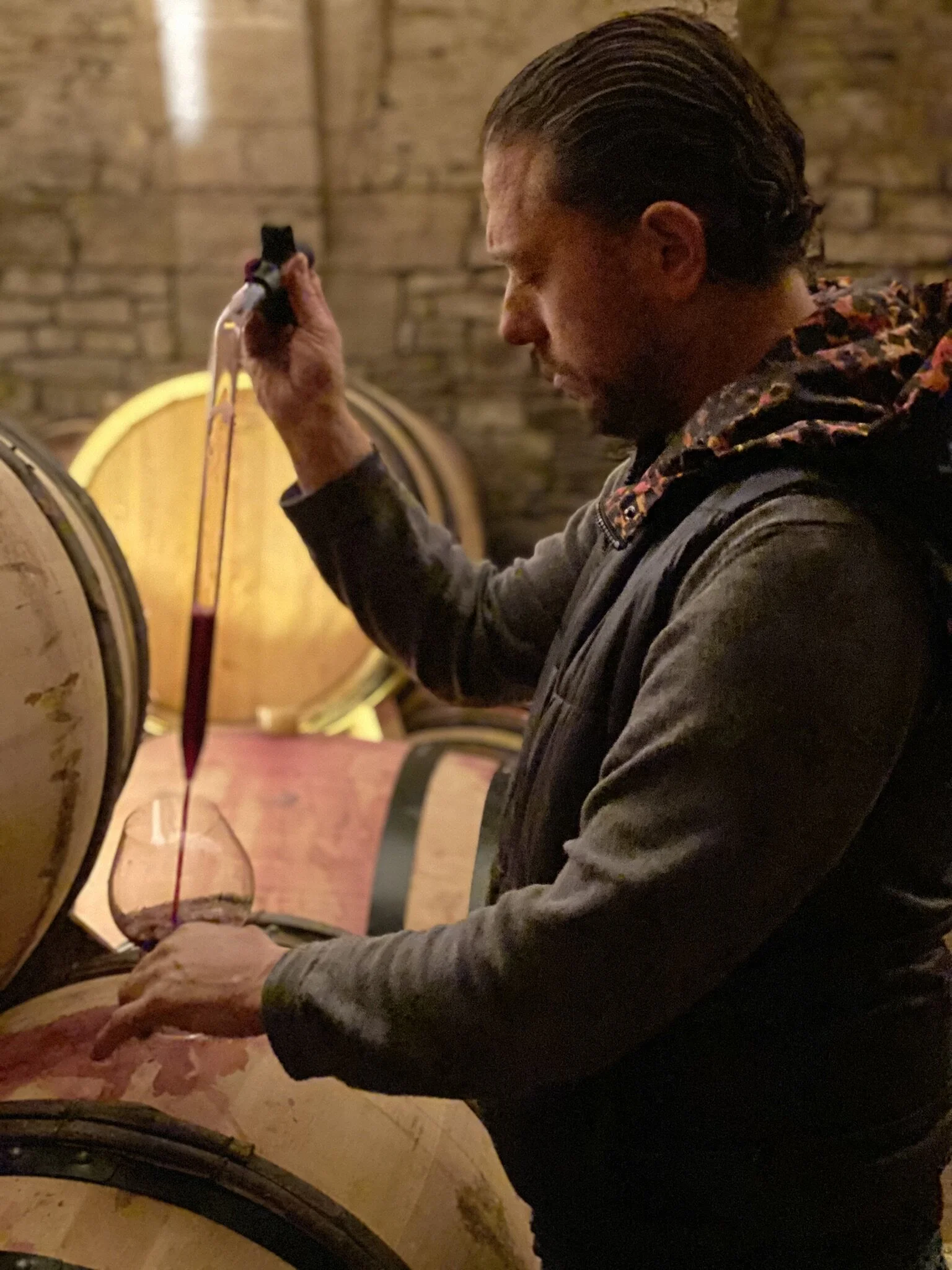
In the cellar, the wines are vinified with as little intervention as possible.
The domaine employs significant quantities of whole-cluster fermentation, varying according to the vintage and the vineyard. There is no cool pre-maceration and extraction continues to be gentler with no more that one punch down and one pump over per day during the fermentation in cement and wooden vats.
Loïc has also quietly reduced the percentage of new oak used and refined the quality of the barrel used for aging. The wines are matured in François Frères barrel that have been thoughtfully selected after a significant amount of time tasting and discussing with Max Gigandet, director of Tonnellerie François Frères.
From 2002 onward, the marriage of wine and wood seems to have become more harmonious and extraction more selective. The wines are bottled without fining or filtration, the exact date being determined by taste.
Chambertin Grand Cru
Très Vieilles Vignes
Near the top of the vineyard the 0.05-hectare plot of Dugat-Py is planted with vines that are 90 year-old in average. This tiny cuvee matures in a small custom-made barrel each year, which varies in size according to the vintage’s production. The yearly production is between 220 and 270 bottles.
Mazis-Chambertin Grand Cru
Très Vieilles Vignes
Dugat-Py’s 0.22-hectare plot of Mazis-Chambertin his planted with 70 years old vines. This vineyard produces deep and tannic wine with impressive length. Between 800 and 1100 bottles are produced every year.
Mazoyères-Chambertin Grand Cru
Made from 0.22 hectares of vines the yearly production of the Mazoyères-Chambertin is between 800 and 1100 bottles. The vines owned by the domaine are on average 30 years old in this parcel.
Charmes-Chambertin Grand Cru
Vieilles Vignes
The Charmes-Chambertin Grand Cru is made from 0.47 hectares of vines. One third of the grapes come from Mazoyères, bringing power, and two third of the grapes come from Charmes, bringing elegant fruit to the cuvée. The Charmes-Chambertin is noticeably the most accessible when young of the Dugat-Py’s Grand Crus.
Gevrey-Chambertin 1er Cru
Lavaux St-Jacques Vieilles Vignes
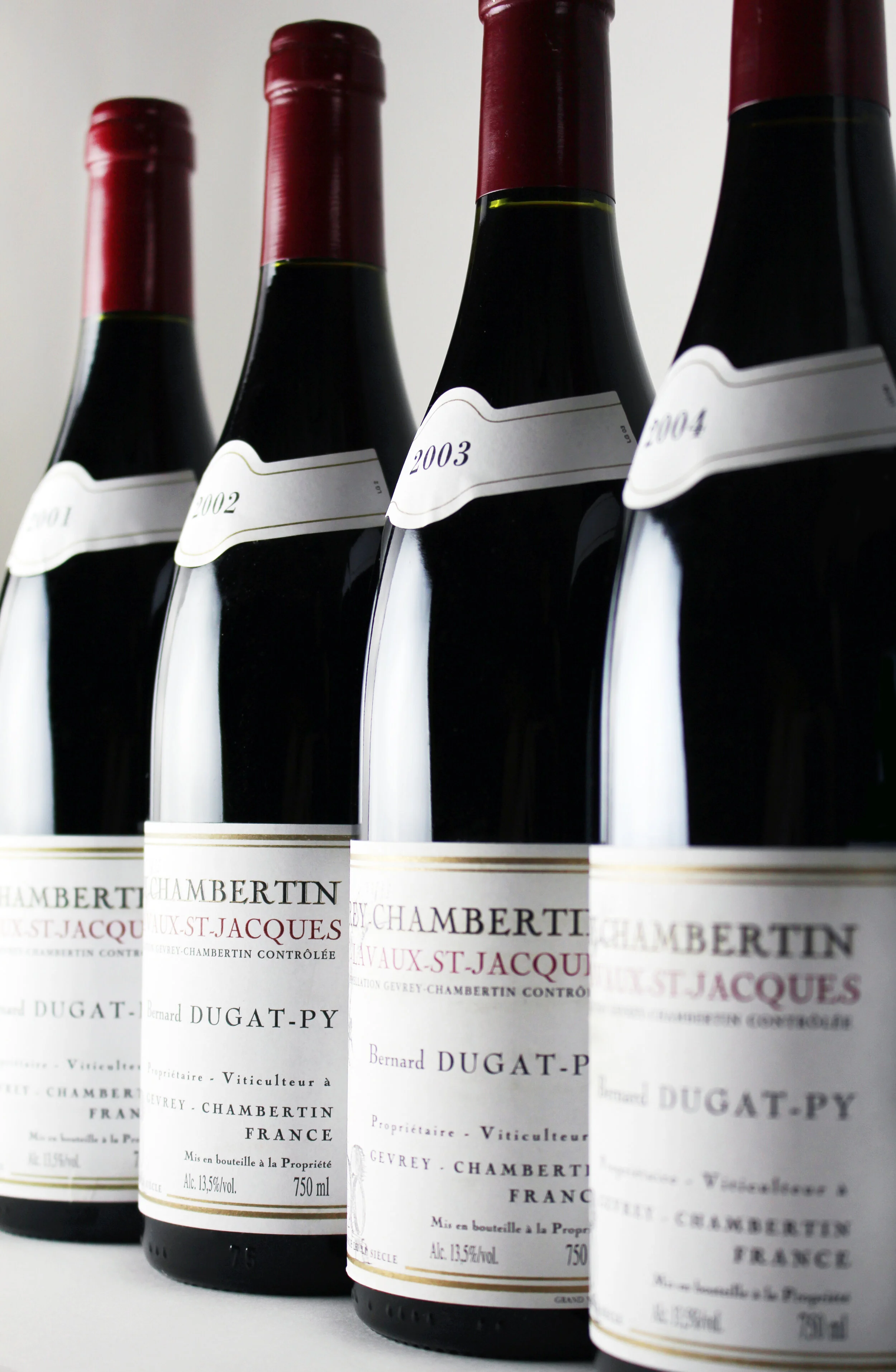
With only 0.14 hectares of vine in Lavaux St-Jacques, Dugat-Py produces no more than 750 bottles every year. Vines here were planted in 1970.
Gevrey-Chambertin 1er Cru
Petite Chapelle Vieilles Vignes
This vineyard is adjacent to the eastern boundaries of the Grands Crus vineyards of En la Chapelle and Les Gèmeaux. Dugat-Py owns 0.31 hectares there and produces between 1000 and 1500 bottles every year.
Gevrey-Chambertin 1er Cru
Champeaux Très Vieilles Vignes
With 0.33 hectares of vines in the 1er Cru vineyard of Champeaux, Dugat-Py produces between 1200 and 1800 bottles every year. The vines here are 55 years old on average.
Gevrey-Chambertin 1er Cru
Fonteny
The vineyard of Fonteny is next to Ruchottes-Chambertin. In 1996 and 2009, Dugat-Py vinified this plot individually instead of blending it in the Gevrey-Chambertin 1er Cru. Both times the results were extraordinary so in 2013 the domaine started to vinify the three plots separately.
Gevrey-Chambertin 1er Cru
Les Corbeaux Très Vieilles Vignes
Les Corbeaux is just between the southern end of the village and the Grand Cru Mazis-Chambertin. Formerly blended with Fonteny and La Perrière to make a Gevrey-Chambertin 1er Cru, this single vineyard 1er Cru exist since 2013.
Gevrey-Chambertin 1er Cru
La Perrière Vieilles Vignes
Formerly blended with Fonteny and Les Corbeaux to make a Gevrey-Chambertin 1er Cru, this single vineyard 1er Cru exist since 2013.
Gevrey-Chambertin Village
Cuvée Coeur du Roy Très Vieilles Vignes
The Cuvée Coeur de Roy is a blend of four different plots: Combe du Dessus, Marchais, Epointures and Jouise. The vines owned by Dugat-Py in these parcels are between 60 and 110 years old. The plot of Combe de Dessus for instance was planted in 1910. Today, two third of the original vines of this plot remain.
Gevrey-Chambertin Village
Les Evocelles Très Vieilles Vignes
Located at the very northeast portion of Gevrey-Chambertin, Les Evocelles is often considered as one of Gevrey best village lieux-dits. Next to the 1er Cru Champeaux, it benefits the same exposition as the 1er Cru. This cuvee comes from a 0.68-hectare plot with vines dating back to 1950.
Gevrey-Chambertin Village
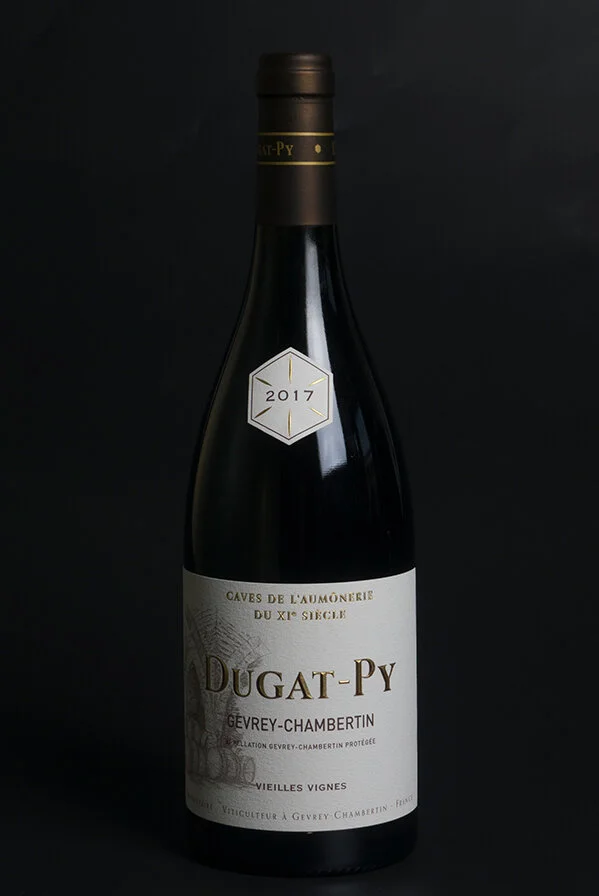
Vieilles Vignes
This Gevrey-Chambertin is a blend of various plots of the appellation. The vines of these holdings where planted in 1965 and 1985.
Vosne-Romanée Village
This Vosne-Romanée Villages is made from two lieux-dits: Les Quartier de Nuits and Les Violettes. Dugat-Py’s holdings in Vosne total 0.31 hectares and were planted in 1938.
Pommard Village
La Levrière Très Vieilles Vignes
The lieu-dit of La Levrière is adjacent to the D974 at the limit of the appellation of Pommard. Domaine Dugat-Py is the only domaine to offer a lieu-dit bottling of La Levrière. The 0.78-hectare parcel of La Levrière is planted with 70 years old vines.
Chorey-les-Beaune Village
Très Vieilles Vignes
The parcel of Chorey-les-Beaune vinified by Domaine Dugat-Py was planted in 1937.
Fixin Village
Clos de Fixey
This Fixin Village was first bottle by Dugat-Py in 2016, Clos de Fixey is a monopole owned by Baron Pinxten.
Bourgogne Pinot Noir
Cuvée Halinard
Named after the abbot who had the Aumônerie built, this Bourgogne Pinot Noir is made from 0.40-hectare of vines of Gevrey-Chambetin Village. The vines here are between 25 and 75 years old.
Bourgogne Rouge
Coming from a total of 1.41 hectares, this Bourgogne Rouge is made from vines that are 35 years old on average.
Corton-Charlemagne Grand Cru
Vieilles Vignes
The Dugat-Py portion of the Corton-Charlemagne vineyard is located in the heart of the vineyard in the middle of the slope. The vines here are 45 years old. Around 1000 bottles are produced every year.
Chassagne-Montrachet 1er Cru
Morgeot Très Vieilles Vignes
Dugat-Py’s holding in Morgeot covers 0.24 hectares and is planted with 65 years old vines. Around 800 bottles are produced every year.
Pernand-Vergelesses 1er Cru
Sous Frétille Vieilles Vignes
Just north of the hill of Corton, this vineyard faces southeast and overlooks the village of Pernand-Vergelesses from the top of the hill. Dugat-Py’s plot here was planted in 1970.
Meursault Village
Très Vieilles Vignes
This Meursault comes from a 0.21-hectare plot planted with 70 year-old vines. Only 600 to 900 bottles are produced every year.
Bourgogne Blanc
This Bourgogne Blanc comes from a 6 year old parcel of Chardonnay planted on clay and limestone soils. Only 500 to 700 bottles are produced every year.